7 Signs You've Outgrown Email-Based Grantmaking
Grants are how good things get funded. Research that matters. Community programs that change lives. Creative work that wouldn't exist otherwise.
But the process behind them? Often messy, outdated, and held together with email threads, spreadsheets, and a few other tools stitched together on top.
Most grantmaking teams start there. Email is familiar. Spreadsheets are free. Maybe you've added a shared drive, a project management tool, or a form builder along the way. This DIY stack works for a while. Then it doesn't.
The stakes are real: the UK National Audit Office estimates that good grant management could generate up to £1.9 billion in annual savings across government grant schemes. That's not a marginal improvement—it's a signal that how we manage grants matters as much as the grants themselves.
This isn't about shaming anyone's current setup. It's about recognizing when the friction starts costing more than it should. When the workarounds take longer than the actual work. When scaling means adding headcount instead of just... scaling.
Here are seven signs it might be time to move on.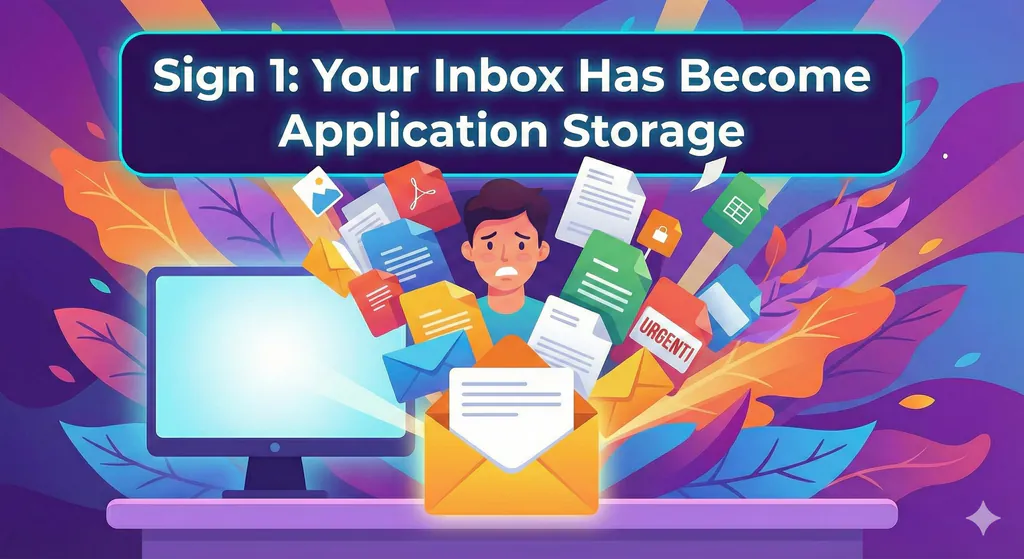
1. Your Inbox Has Become Application Storage
Applications arrive as attachments. Then the downloading begins. And the renaming. And the filing. And the searching.
"Wait—is this the final version?" becomes a daily question. Budget spreadsheets have numbers scattered across tabs. Letters of support are buried three replies deep in a thread nobody wants to scroll through anymore.
Staff spend hours organizing before they can even start reviewing. Applicants send the same document twice with different filenames, or upload a corrected version that overwrites the original, or forget to include something critical and nobody notices until decision day.
Consider what applicants are dealing with on their end: writing a single federal grant application takes an average of 80 to 200 hours. When those carefully prepared materials disappear into an email void with no confirmation, no status updates, and inconsistent feedback loops, trust erodes on both sides.
It's not that email can't handle attachments. It's that email wasn't built to be a document management system. Eventually, the friction compounds.
One funding lead in the health sector described the shift simply:
Prior to having Tahua we had no GMS—all grant applications and assessment was done via email. Tahua has made my life so much easier.
This is a story we hear consistently from organizations across sectors.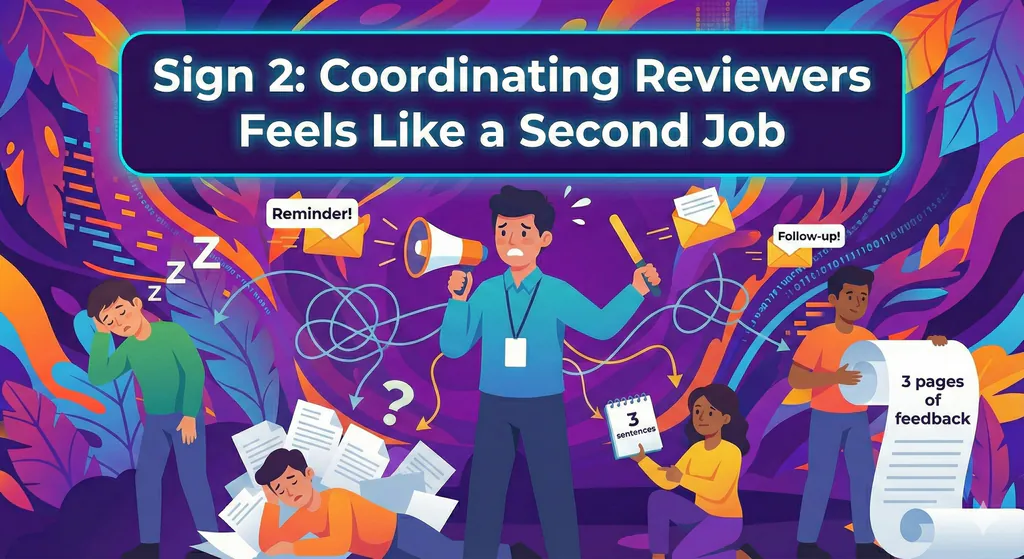
2. Coordinating Reviewers Feels Like a Second Job
You send applications to reviewers. You send reminders. You send follow-up reminders. You wonder who's done, who's stuck, and who quietly forgot.
Meanwhile, conflicts of interest get discovered after reviews are complete. Feedback comes back in wildly different formats. Some reviewers write three sentences; others write three pages. Compiling everything into a coherent picture takes longer than the reviews themselves.
Before switching to purpose-built software, grantmakers consistently report difficulty organizing reviewers and feeling overwhelmed by communications. None of this is anyone's fault—it's just what happens when coordination depends on inbox discipline and good intentions.
As programs grow, the coordination overhead grows faster.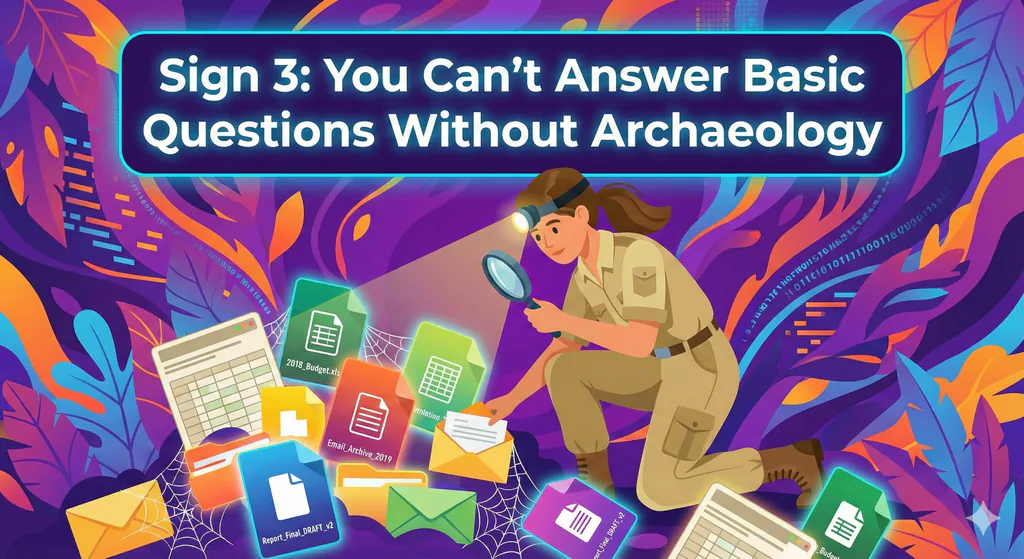
3. You Can't Answer Basic Questions Without Archaeology
"How many applications did we receive this quarter?"
"What's our average time from submission to decision?"
"How does this round compare to last year?"
If answering these questions means opening multiple spreadsheets, searching email archives, and doing mental math—you're working harder than you need to.
The data tells a stark story: many grantees still rely on email reporting along with manual data entry, and a significant portion have no database for grant reporting at all. Data scattered across systems creates blind spots. You end up with approximations instead of answers.
Reports get generated reactively (when someone asks) rather than proactively (to actually learn something). And because data lives in different places, different people have different numbers—which creates its own kind of friction.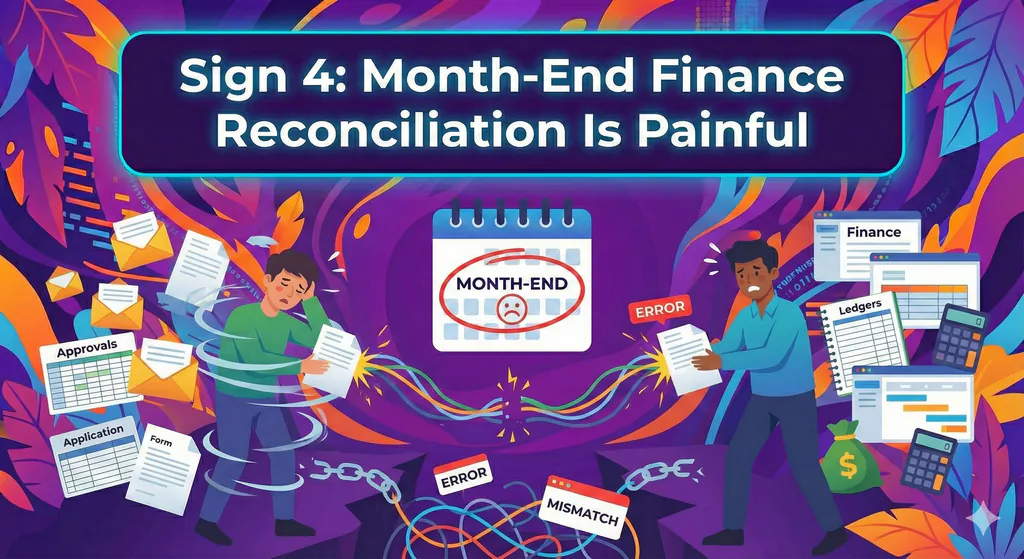
4. Month-End Finance Reconciliation Is Painful
Grants and finance often live in separate worlds. Applications in email. Approvals in spreadsheets. Payments in the accounting system. Notifications sent manually after everything else is done.
Then someone has to reconcile it all.
Double-handling is the norm. Errors creep in because humans are copying data between systems. Audit trails are stitched together from screenshots and forwarded emails. Month-end becomes a small project instead of a routine check.
Research from the Bridgespan Group found that one nonprofit was spending 31% of a grant's value on administration—while the funder had specified only 13% for indirect costs. Much of that gap comes from the invisible labor of reconciliation, re-entry, and manual tracking that purpose-built systems eliminate.
The gap between grant operations and finance is one of the most underrated sources of wasted time. And it's one of the most satisfying things to fix.
One community foundation in Aotearoa New Zealand that manages over 500 donor funds and distributes more than $5 million a year used to import distributions into their accounting system via CSV, manually opening and allocating over 200 bills at a time to the correct donor ledger. When they moved to an integrated system, the process was automated. As soon as distributions were allocated to the correct fund in the system, the corresponding ledgers were automatically selected based on fund names. What once took hours now happens in seconds.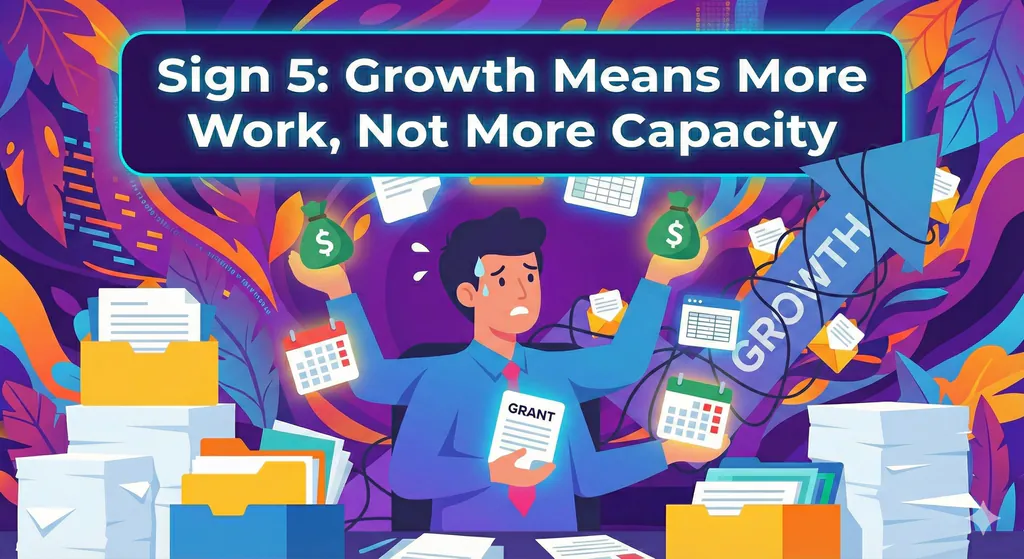
5. Growth Means More Work, Not More Capacity
Here's the hidden tax on email-and-spreadsheet grantmaking: every new application adds manual work. Twice the applications means twice the emails, twice the filing, twice the coordination.
Teams that should be focusing on impact end up focused on logistics. Staff work overtime during application windows just to keep up. Backlogs build. Adding a new grant round feels like adding a new job responsibility.
Before adopting grants management software, the vast majority of grantmakers report inefficient processes and wasted time on administrative tasks. That's not a few edge cases—that's the norm.
The organizations we work with tell us the same story over and over: email and spreadsheets worked fine initially, but once they hit a certain scale—50, 100, 200+ applications per year—the manual process became unsustainable. That's when they come looking for a solution. With over 15,000 applications managed through Tahua, we've learned exactly where and why that breaking point happens.
One community foundation we work with now manages 500+ donor funds and distributes millions annually without adding headcount. Their tagged payments—the most complex part of their operation—process in a single day instead of taking over a week. What would have required hiring more staff is now handled seamlessly by the existing team.
Te Māngai Pāho, a Crown Entity supporting Māori language media, had a similar experience. Their original system was entirely paper-based—applicants sent in paper applications, assessors manually reviewed each one, and board letters were generated by hand. After moving to Tahua, their small team more than doubled the number of funding rounds and contracts under management in two years.
That's not magic. That's what happens when the system does the heavy lifting.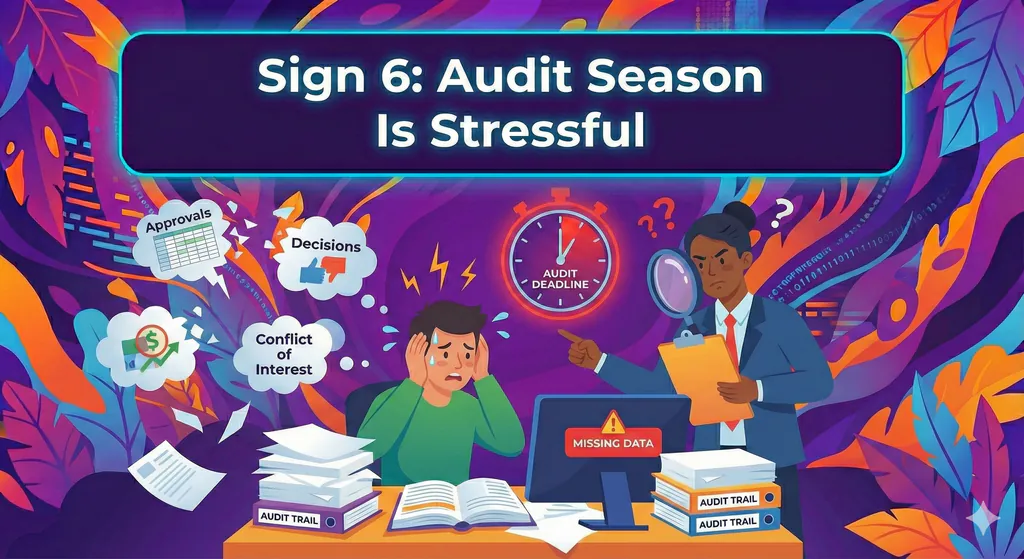
6. Audit Season Is Stressful
Public and philanthropic funding comes with accountability. When auditors ask how decisions were made, you need to show your work—not reconstruct it from memory.
Email-and-spreadsheet processes make this hard. Decision rationale lives in threads that may or may not still exist. Approval chains are inferred rather than documented. Version control is aspirational. Conflict of interest disclosures? Hopefully someone saved those somewhere.
The Federal Demonstration Partnership found that researchers spend 42% of their federally-funded research time on administrative activities rather than active research—and grant progress reporting was consistently ranked as the single most burdensome task. Much of that burden stems from documentation systems that weren't designed for the accountability requirements they're now expected to meet.
None of this is impossible to manage manually. It's just fragile. And fragile systems become stressful systems when scrutiny arrives.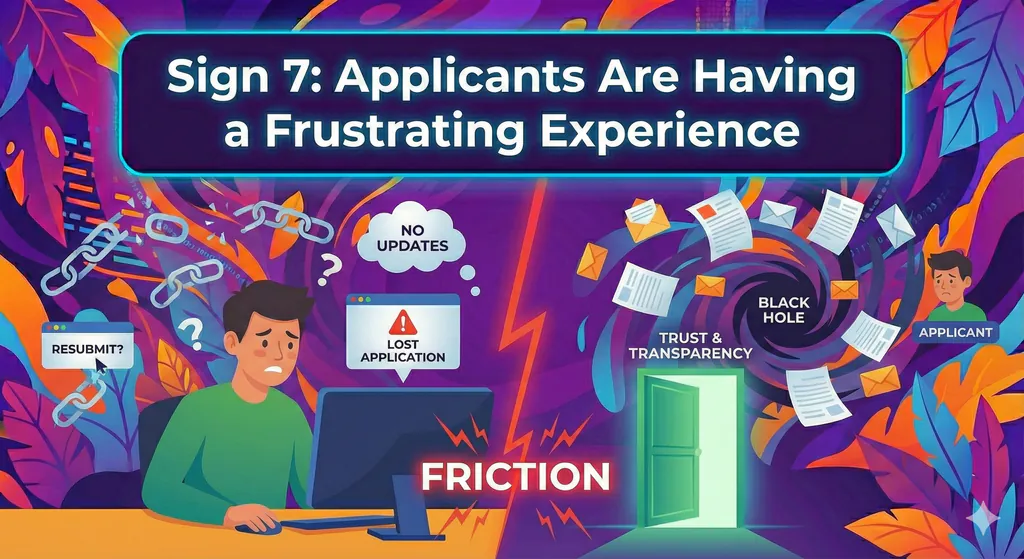
7. Applicants Are Having a Frustrating Experience
The problems above are internal—but applicants feel them too.
They submit an application and hear nothing. They don't know where they stand in the process. They get asked to resubmit something that got lost. Instructions are spread across multiple emails. Responses take longer than they should because staff are buried in inbox management.
Research from the Council of Nonprofits found that nearly three-quarters of nonprofits regularly encounter complex application processes, with many reporting that government red-tape, duplicative submission requirements, and costly protocols waste time and resources. Similarly, a large majority reported that reporting requirements are complex and time-consuming.
Friction on your side creates friction on their side. And these are the people you're trying to help.
As one fund manager put it: "My number one priority is to make our funding as accessible to as many whānau as possible... The layout, presentation, clear labelling, and easy 'ask for help' features give whānau confidence and the ability to access our funding."
When the application experience is smooth and transparent, it builds trust. It shows respect for people's time. It says something about the kind of organization you are.
What Comes Next
If a few of these signs hit close to home, you're not alone—and you're not behind. Most grantmaking organizations started where you are. The question is whether your current setup is still serving you, or whether the workarounds have started to cost more than they're worth.
There's momentum in the sector toward change: 67% of foundations are actively working to streamline applications, and 56% are streamlining reporting requirements. The shift is happening because the old approach has hit its limits.
Modern grants management platforms exist because these problems are common and solvable. Structured application forms instead of email attachments. Centralized reviewer coordination with progress tracking. Real-time dashboards instead of spreadsheet archaeology. Finance integration that closes the reconciliation gap. Audit trails that document themselves. Applicant portals that create clarity instead of confusion.
The shift doesn't have to be dramatic. It just has to match the reality of what you're trying to do.
Because at the end of the day, grants are how good things get funded. The less time lost to process, the more resources reach the people solving real problems.
That's what we're here for.
About Tahua
Over the past eight years, Tahua has helped government agencies, community foundations, and charities across New Zealand, Australia, the UK, and Canada take the friction out of grants management. To date, Tahua has managed over 15,000 grant applications, 10,000+ applicants, and over $1 billion in grants.
Te Māngai Pāho, a Crown Entity supporting Māori language media, more than doubled the number of funding rounds and contracts under management in two years after switching to Tahua. Te Rau Ora, a philanthropy organization focused on accessibility, found that Tahua created a single source of truth for managing multiple funds across multiple teams while maintaining high accessibility standards for applicants.
We're consistently rated 5/5 on Capterra, with users highlighting ease of use, customization, responsive support, and genuine impact on their operations. View verified reviews here:
We believe in a rigorous onboarding process. New customers typically work through six structured sessions with our team—including a free strategy session upfront—to ensure you're set up for success and ready to run your first funding round smoothly.
We've learned that good grants management isn't about fancy features. It's about doing the unglamorous work of tracking applications, coordinating reviewers, managing payments, and generating reports in a way that removes friction instead of adding it. It's about giving teams the tools they need to scale impact without scaling headcount.
If you're managing grants with email and spreadsheets, you already know what it costs. Let's talk about what's possible instead.
About the Author
John Gonzales is the Co-Founder of Tahua Grants Management. With over 20 years of experience as a business owner, entrepreneur, UX designer, and systems architect, John has helped organizations across government, nonprofit, and creative sectors solve complex operational problems. He's passionate about removing process friction so mission-driven teams can focus on what matters: impact.
Citations & Sources
UK National Audit Office. (2024). Government's general grant schemes. https://www.nao.org.uk/wp-content/uploads/2024/07/governments-general-grant-schemes.pdf
Stanford Social Innovation Review. (2009). The Nonprofit Starvation Cycle. https://ssir.org/articles/entry/the_nonprofit_starvation_cycle
Federal Demonstration Partnership. Faculty Workload Survey on administrative burden in post-award federal research administration. https://commons.und.edu/cgi/viewcontent.cgi?article=5374&context=theses
Council of Nonprofits. Common Problems in Government-Nonprofit Grants and Contracts. https://www.councilofnonprofits.org/trends-and-policy-issues/government-grants-and-contracts
Technology Association of Grantmakers. 2024 State of Philanthropy Tech Survey. https://www.tagtech.org/wp-content/uploads/2024/07/2024-PhilTechSurvey-Final.pdf